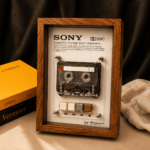
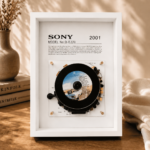
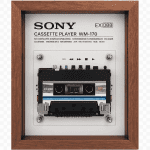
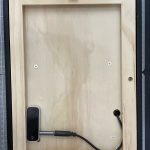
Upcycled audio art sits at the intersection of nostalgia, design and sustainability. It starts with a familiar object such as a vintage CD player, cassette Walkman or portable music device and gives it a second life as framed decor. Instead of treating old technology as clutter, the object becomes a visual story. For people who love music, this is powerful because the artwork is not only about how something looks. It is also about how music once felt: physical, intentional and closely tied to memory.
BAOBO Studio creates custom vintage audio frame art using real 80s and 90s music hardware. The studio’s work is designed for collectors, gift buyers and home decor lovers who want something warmer than a poster and more personal than a generic print. A framed CD player or Walkman can carry the feeling of an era while still looking clean in a contemporary room. That balance is what makes upcycled audio art especially appealing for Western customers who like meaningful objects but also care about refined interiors.
What upcycled audio art means
Upcycling is different from simple recycling. Recycling usually breaks material down. Upcycling keeps the object’s character and raises its value through design. In audio art, the history of the device matters. A Sony Walkman, a Panasonic CD player, a Discman-style unit, a cassette door, a circuit board or a set of buttons can all become part of the composition. The material is not anonymous. It has a past, a function and a cultural place.
This is why upcycled audio art feels so different from decor that only imitates retro style. A new object made to look old may be attractive, but it does not carry the same presence as real hardware. Real devices have proportions, labels, scratches, screws and small engineering decisions that reveal their time. When these details are arranged thoughtfully inside a frame, the piece becomes a conversation between design history and personal memory.
Why CD players and Walkmans are ideal subjects
Portable music players are compact, recognizable and emotionally charged. They are small enough to frame, but detailed enough to reward close viewing. A CD player offers circular forms, transparent windows, labels and a connection to the 90s album era. A Walkman offers buttons, cassette mechanics, tactile surfaces and a connection to mixtapes and analog listening. Both formats represent a time when music had a physical relationship with the listener.
They also appeal to different types of buyers. Some people are drawn to the clean geometry of a CD player. Others prefer the mechanical romance of cassette players. Collectors may care about brand, model, age or rarity. Gift buyers may care more about the memory the object creates. Interior design buyers may focus on shape, color and how the piece fits a wall. Upcycled audio art can meet all of these needs because the object is both decorative and meaningful.
Sustainability with emotional value
Sustainable decor can sometimes feel cold or purely practical. Upcycled audio art adds emotion to the idea. It gives old devices a new reason to exist, but it also preserves cultural memory. A portable player that may no longer be used every day can still be admired, discussed and loved. That matters because many people do not want to throw away objects that shaped their lives. Framing them respectfully turns preservation into design.
This approach also encourages buyers to think differently about technology. Not every older device needs to disappear the moment a new format arrives. Some objects deserve to be studied for their design, sound culture and emotional impact. A framed audio piece can remind viewers that technology is not only about speed or convenience. It is also about the rituals people build around it.
How to make upcycled art feel premium
The key is presentation. A premium piece needs visual clarity. The background should support the device rather than distract from it. Spacing should feel intentional. The frame should fit the room and the object. Color should be limited so the hardware remains the hero. BAOBO Studio often works with clean neutrals, deep gray, black, warm gold and subtle vintage orange because these tones feel mature and timeless. They give the work warmth without making it look like a themed decoration.
Another important choice is whether the piece should feel whole, deconstructed or narrative. A whole-player layout emphasizes preservation. A deconstructed layout shows engineering and craft. A narrative layout may include related objects, small captions or a stronger gift message. None of these approaches is automatically better. The best choice depends on the customer’s story, the recipient and the room where the art will live.
Who buys upcycled audio art
The audience is broader than many people expect. Music collectors buy it because they appreciate the hardware and the era. Interior design shoppers buy it because it adds personality without relying on mass-market prints. Gift buyers choose it because it feels thoughtful and uncommon. Studio owners, DJs, producers and musicians like it because it speaks to the culture of listening. People who grew up in the 80s and 90s often respond immediately because the devices are tied to formative memories.
That mix of audiences is one reason the category is growing. Upcycled audio art is not only a nostalgia product. It is also a design product, a collectible and a personalized gift. It can be serious, warm, technical or emotional depending on how it is made. BAOBO Studio’s role is to help customers shape that direction so the finished piece feels like it belongs to them.