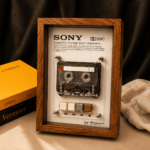
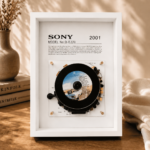
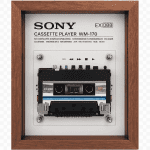
For many music lovers, the sound of a CD tray closing or a portable Discman spinning up is more than a memory. It is a small time machine. A favorite album, a first pair of headphones, a road trip mix, a school locker, a bedroom shelf, or a late-night listening session can all come back through one familiar object. That emotional pull is exactly why custom vintage CD frame art has become such a meaningful way to decorate a modern home. It does not behave like ordinary wall art. It carries a personal story, a real piece of technology, and a visual connection to the way people once listened with intention.
BAOBO Studio focuses on transforming authentic vintage CD players, Discman-style devices and related audio parts into framed artwork that feels clean, warm and collectible. Instead of hiding old music hardware in a drawer, the object becomes the center of a display piece. The result can fit a listening room, home office, studio, living room, hallway, record corner or gift wall. For buyers in the United States, Canada, the United Kingdom, Europe and Australia, this kind of piece speaks to a shared nostalgia: the period when physical music felt precious and portable players were part of everyday identity.
Why vintage CD players still feel special
The CD era sits in a fascinating place between analog and streaming. It was digital, but still physical. People chose an album, opened the case, read the booklet, held the disc by its edge and placed it into a player. That ritual made listening feel deliberate. A vintage CD player captures that moment beautifully because it combines function, industrial design and cultural memory. The transparent lid, circular disc window, control buttons, battery compartment, headphones jack and compact shape all tell a story before any text is added.
In a framed composition, those details become visual language. The curves, screws, circuit boards, labels and surface wear are not flaws to erase. They are part of the history. A good custom piece should feel refined enough for modern interiors while still preserving the character of the original device. This balance is important. If the artwork becomes too polished, it loses the honesty of the object. If it feels too raw, it can look like a repair bench instead of decor. BAOBO Studio aims for the middle ground: clean presentation, real vintage material and a warm sense of memory.
What makes custom vintage CD frame art different from a poster
A poster can show an album cover or artist image, but custom vintage CD frame art gives the viewer a physical artifact. The depth of the player, the shadow inside the frame and the arrangement of components create a three-dimensional presence. This makes the piece feel closer to collectible design than printed decoration. It also gives customers a way to express taste without using obvious band merchandise. Someone can love 90s music, hi-fi culture, electronic design or physical media without turning their living room into a fan wall.
That subtlety matters for Western home decor. Many customers want objects that are personal but not loud. A framed Sony, Panasonic or other vintage portable CD player can sit comfortably with wood furniture, books, vinyl records, neutral walls and soft lighting. It can also look strong in a minimalist apartment because the object itself provides texture and contrast. The best pieces are easy to understand from a distance and rewarding up close.
A personalized gift for people who already have everything
Gift buyers often struggle when shopping for music lovers. Many already own headphones, records, speakers, posters or streaming subscriptions. A custom frame solves that problem by feeling specific. It can reflect the recipient’s favorite era, favorite format, favorite device style or personal memory. It works especially well for birthdays, anniversaries, housewarmings, Father’s Day, Mother’s Day, holiday gifts, retirement gifts and studio opening gifts.
Personalization does not have to mean adding a large nameplate or heavy decoration. Sometimes the strongest customization is choosing the right device type, frame color, layout, background tone and optional music-related details. A warm neutral background can make the player feel gallery-like. A black frame can add contrast and make the device look premium. A small note or caption can add meaning without overwhelming the design. The goal is to create something the recipient will actually want to display for years.
How to choose a piece for your room
Start with the mood of the room. If the space is bright and modern, a clean white or light gray background often works well. If the room has darker wood, leather, records or studio equipment, a black or warm-toned frame can feel more grounded. Next, think about scale. A smaller framed CD player can work on a shelf or narrow wall, while a larger composition can become a focal point above a console, listening station or desk.
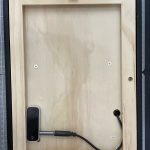
It is also worth considering whether you want the device to feel preserved, deconstructed or active. Some buyers prefer a whole player presented like a museum object. Others like seeing internal parts, screws, circuit paths and mechanical details. BAOBO Studio can make the artwork feel more technical, more minimal or more gift-focused depending on the story behind the order. For collectors, authenticity is often the key. For gift buyers, emotional clarity may matter more.
Why BAOBO Studio focuses on real vintage hardware
Real hardware has details that replicas cannot fully imitate. The small scratches, model labels, tactile buttons and proportions of a vintage CD player carry the era with them. BAOBO Studio works with authentic devices because the object is the story. When possible, the studio also respects the functional identity of the player. The aim is not to treat audio history as disposable material, but to give it a second life as meaningful art.
For customers who care about sustainability, this also connects to upcycling. A device that might otherwise sit unused can become a lasting piece of decor. Upcycled audio art does not ask people to choose between nostalgia and modern design. It lets both exist in the same frame.